
Would you like to support these blogs? You can buy me a virtual coffee!
If you enjoy reading my blogs, feel free to buy me a virtual coffee through Ko-fi. No pressure though, just a way to support these free resources.


Evolving from engineer to leader to self-employed coach
Our identities are complex, multi-faceted and ever evolving.
I am a founder and coach. I am also an engineer, an educator, a leader, a runner, a reader, a nature lover and more. I am a coach, coachee and lifelong learner.
In 2004 I started my PhD in Biomaterials and spent the following 20 years in Higher Education, as a researcher, lecturer, Associate Professor, Head of Department and then Head of School. It was a rollercoaster journey, with highs and lows, teaching and being taught, supporting others and being supported. I worked with wonderful people, both staff and students, and have made friends for life.
I did not always find it easy; self-doubt, self-confidence, learning new skills and techniques. But I got there, with the support of others, and lots of hard work. And some of my proudest career moments come from the most difficult times.
In my leadership roles, I received Executive Coaching. It transformed me — as a manager, leader and most importantly, as a person. Self-discovery, growth in confidence, dealing with difficult decisions and situations, coaching helped me understand what really matters to me. But that is for another blog…
Both in working with students, and in my leadership roles with staff, I discovered what really made me happy — supporting others to achieve more than they thought possible, building confidence, uncovering strengths, working through problems and more.
Towards the later stages of my academic career, I wasn’t as happy as I used to be. Things at work changed and I realise I wanted a change. I was already coaching and I knew this was what fulfilled me, and so Siskin Coaching was born! Was it scary making a career transition in my mid-40s? Yes! Am I glad I did it? Absolutely.
As I said at the start, we are ever evolving as individuals. And right now, in my current evolution, I have found something that really aligns with me as a person, what I want to give to others, and the life I want for myself.


Navigating a STEM career as a woman: My experience
Being a woman in STEM can be challenging and also hugely rewarding.
We are in the minority in the vast majority of disciplines. And as we progress into leadership roles there are even less of us! According to the Institution for Employment Studies (2021), women leave engineering roles at twice the rate of men. The reasons cited; stereotyping, isolation and bias. This is not happy reading I know.
My own experience in academia was mixed but overall very positive. I did face some challenging and unacceptable behaviour at times. But I also met, was taught by, worked with, and managed by, some incredible STEM women who were amazing role models for me. And some brilliant men who were allies (some without even knowing it).
The key things for me were finding and building relationships with the right people (and distancing or challenging those that were not), learning to call out and educate unacceptable behaviour in a way that was comfortable to me, living true to my own values, finding the fun factor in what I was doing, and always learning and developing myself and supporting those around me to do the same.
Through a career in STEM, I have travelled to places I never would have visited, worked on amazing projects, met fantastic people and developed myself beyond what I thought was possible. I have been supported, promoted, awarded and connected. I am thankful and appreciative of the people who have been around me at the time supporting me and to those who came before me and paved the way.
Many of us find ourselves in the minority in some aspect of our lives and it can be tough. So knowing who you are and being confident in your own space is incredibly important. But so is having the right support in place to help you thrive.
I have loved working in STEM and I would love to see more women and girls considering it as an option. There are some great organisations out there that will support your journey. Drop me a message to chat or for links to people who can help.
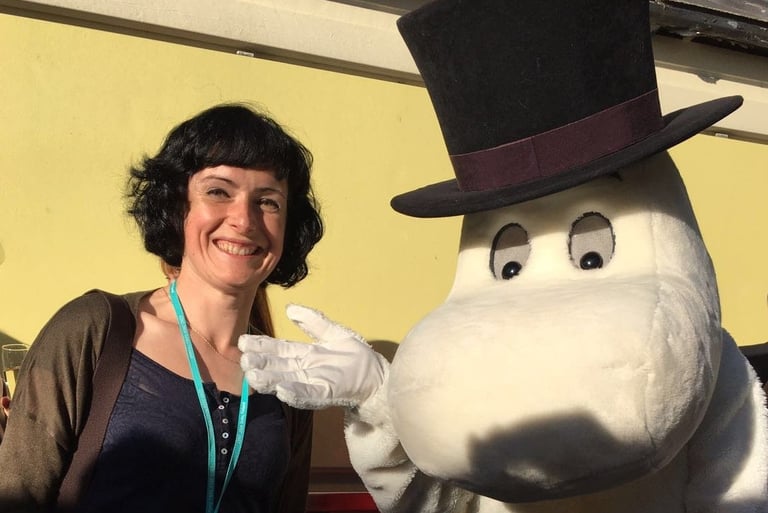
I even met the Moomins in Finland thanks to STEM!
Why I won't be making any New Year's Resolutions (NYRs)
In my personal experience, NYRs don’t work and neither do they feel good. There’s nothing wrong with them in theory, and for some people, they can work really well. But for me, they just aren’t right and, according to the internet, over 80% of NYRs are abandoned within the first month.
I do think that wanting to make meaningful change in our lives is important, worthy and absolutely achievable, so why don’t I think the two go together?
I find NYRs are often very absolute, all or nothing, no wriggle room goals e.g. I’m going to give up [insert your favourite but very unhealthy habit here e.g. chocolate] – and that means that they are usually big, challenging and usually approached solo with no support in place. And then, because we have declared this as our NYR then we place a lot of internal negative pressure on it which isn’t always helpful. NYRs also often come in the form of something we think we should want to achieve, instead of something that is really meaningful to us. And NYRs are regularly phrased in a negative way e.g. I’m going to give up …., or, I’m going to stop …., or even, I’m going to make myself …. None of these sound like positive messages for our brains and bodies to get on board with and therefore, for me, they just don’t feel good.
So what do I do instead? For the things I want to achieve in my life, I set meaningful, measurable goals that really matter to me, at a time that works for me and with the right support in place. I think about the reasons for wanting that thing in the first place and make sure it is achievable and that I have the right type of motivation to get there. And I know that I am more likely to succeed with the help of others. I set my goals at a time that works for me, when I am ready, not when I feel I should.
At New Year, I think about what I am looking forward to in the year to come, what I want to do more of, what I feel excited about and what opportunities lie ahead. No pressure, no big gestures, just what works for me.
I’m not advocating for everyone giving up on NYRs. Maybe they do work for you, but if not, then be kind to yourself, and find a way of setting goals that work for you. And of course, I highly recommend coaching to support you through the process and into a future that you really want!


I always look forward to the time planned for outdoor activities each year. What do you look forward to?
Lead Next: In Conversation with Dawn Murden
This blog is a little bit different to normal. Because instead of sharing my sometimes useful, sometimes random thoughts, I’m going to be asking someone else to share their thoughts. And in this case, I have some questions for the wonderful Dawn Murden. Dawn and I met through our coaching qualification, have actually coached each other at various times, and we are the co-founders of our group coaching programme – Lead Next: The Self-Awareness Advantage.
Dawn has a fascinating background in journalism, customer success and leadership. She is also a digital nomad who works from various locations across Europe. And most exciting, in my opinion, is that she also has a gorgeous rescue dog called Diego (probably not as relevant as I think). Now she is a founder and Executive Coach in her business – Dawn Murden Coaching.
On to the questions! I sent Dawn eight questions about her time as a leader, both in industry and as a founder. Read on to see what she said.
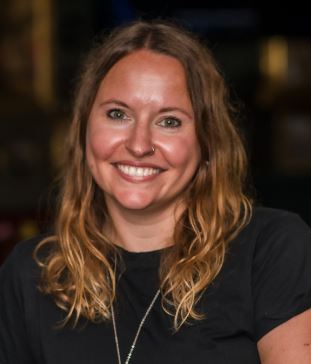
Find out more about Dawn on her website
What one word best describes you as a leader, and why?
I would say “discernment”.
I understand people, situations, and organisations quickly. I’m able to connect what’s happening on the ground with the wider commercial and strategic context. As a neurodivergent person, I tend to process patterns and dynamics visually, which helps me spot issues and opportunities.
After a challenging day, what do you do to unwind or switch focus?
Quite a few different things — and it all depends on how challenging the day was and how I’m feeling.
I like getting outside and going for a walk with Diego, cooking a nice meal, watching TV (I loved the recent series 4 of Traitors), and I’ve set myself a reading goal this year. I’m currently reading ‘Welcome to the Neighbourhood’ by Jane Fallon, which had me laughing out loud the other day. Before that, I read ‘Nature’s Ghosts: The World We Lost and how to Bring it Back’ by Sophie Yeo. I love Sophie’s writing style and it’s inspiring my own non-fiction writing, which is something else I like doing to unwind.
Last but not least, I like heavy metal music (great if the day was particularly challenging and I can have a head bang 🤘), pole, yoga, and running.
What drew you to transitioning your career to coaching?
I experienced the power of coaching for myself when I stepped into my first leadership role. I was looking for a leadership course and found one at London’s AllBright, which included both 1:1 and group coaching. It helped me to navigate that transition.
Before that, I regularly signed up for free coaching webinars and tasters. Coaching always intrigued me. I had tried other disciplines like counselling and therapy. I liked the idea of a talking discipline that believes that the individual already has all the answers, and that they just need support to unlock them. Empowering others is rewarding work.
I signed up for The Coaching Academy’s double coaching diploma in 2023. Then, after a period of ill mental health, I resigned from my full-time VP role to figure out what was next for me. Now, I’m just under a year into my portfolio career, which at the heart of that includes running my own coaching practice.
What has been your favourite leadership/coaching read/listen so far, and why?
I really like:
https://open.spotify.com/show/3WvtCtL5SzM8BNlx9MgHdX?si=1f2bc9ce668540af (my former coach)
https://open.spotify.com/show/7vz4RYsD5MulTCrcH478t1?si=f117797386ae49c5
https://open.spotify.com/show/2IVZCeBTFUFl2iysDe9uJu?si=45a6288761dd4724 (very useful when I was in customer success)
The 7 Habits of Highly Effective People, Stephen Covey
What was your proudest moment as a leader, and why?
The feedback I got from colleagues when I made the difficult decision to move on from my leadership role. I’m very hard on myself. And even though I had been given plenty of regular feedback in 1:1s, etc, when you’re unwell for a long period of time you don’t really take it in properly.
At the closing of that chapter, it gave me comfort and closure that I had indeed made a difference to the lives of others through work, and that the work I did was truly appreciated. Also, it signalled that coaching was a good next path for me.
Our brains are wired to concentrate on the negative, and when it comes to mine, that is definitely the case. My brain = The Anxiety Architect.
What one piece of advice would you give to your younger self in your first leadership role?
Keep working on yourself. That’s really the best place to start and the one thing you can control.
Also, ask yourself: “Will it matter in a year?”. In high pressure environments, we can get overwhelmed and start overthinking the ‘wrong’ things. Give yourself permission to turn some mountains into mole hills, and then move on.
What’s the best part of digital nomad life?
Seeing, learning about, and immersing myself in new places. Meeting new people, and seeing family and old friends. Also, I like our compact little house on wheels , AKA van (it still doesn’t have a name).
When I was unwell, seemingly small things like tacking the laundry pile felt really overwhelming. Even though there’s technically more coordination required now as we move from place to place, we have a lot less stuff and life just feels more environmentally-conscious and simple. I like that.
Which animal or plant best represents you, and why?
They say dogs are like their owners. Diego represents me pretty well. He loves a long walk, but struggles to get out of bed. He likes dancing. And he really likes cheese. We have a lot in common.
How I’m learning to quieten my inner saboteurs and grow my self-mastery
Ever had a voice inside your head that just won’t let you forget that one mistake you made at work? Or that negatively judges everything you did, are doing, or even dream about doing? What about the voice that tells you everyone has to like you? Or that tells you to avoid anything difficult or boring? Chances are that these voices belong to your internal saboteurs. And though they may originally have been strengths that you developed when you were younger, they may well now be negatively affecting how you feel, and the decisions you make on a daily basis.


So here are my three key take-aways from the PQ course that I would like to share with you:
1) Saboteurs started as strengths – Our saboteur voices, whether it be the ‘avoider’, ‘hyper-achiever’, or one of their other delightful friends(!), most likely stem from a strength we developed when we were younger. And in moderation, that voice, driver or thought isn’t inherently bad. But when it is in overdrive and doesn’t shut down, then it can really cause us to get, and stay, in our own way, be pretty unhelpful, and even quite draining. An example might be the ‘pleaser’ saboteur – early on it helped us make friends, be liked and help others, but now, our own needs fall to the bottom of the pile and we feel selfish for even thinking about ourselves… (hmmm, that’s not helpful I hear you say)
2) Recognising the saboteur is key – The good news is that we can all do something about it. Even just the act of recognising that a thought or feeling comes from a saboteur, and celebrating catching the saboteur in action, can be enough to jump into the positive sage mind. I love the simplicity of this! Just saying to myself “Oops that’s my judge talking in my head, no thanks, not today!” can be enough.
3) Consistency matters – Changing thought patterns, i.e. shifting from the saboteur to sage mind, takes daily effort. But that effort gets easier and easier as the sage mind becomes stronger. Just like physical exercise, consistency is key, and with time we start to feel the long term benefits and thank ourselves for making that choice. Well done us!
Are you interested in learning more about PQ? You can take the free test online to identify your top saboteur voices here. Sometimes, identifying them is enough to start that self-awareness shift. But if you want to talk it through, then working with a coach is the way to go. But I would say that, right?!
So much of the coaching conversation is about self-awareness, and this course not only supported my own self-awareness, but is helping me work with my clients in different ways on their own self-discovery journeys.
Drop me a message or book in for a free discovery call if you would like to learn more about how coaching can support you to increase your self-awareness, shift your thinking and self-belief, and take actions towards your goals and dreams.
At the start of 2026, I attended a 7-week long program with the Positive Intelligence (PQ) organisation. Founded and run by Shirzad Charmine, author of “Positive Intelligence”, it was a course for coaches who want to support their clients and themselves in building the mental fitness required to shift from that pesky, negative, internal voice of self-sabotage to the voice of the inner, positive, sage mind of self-mastery. Shirzad’s approach is that those saboteurs are the inner voices holding us back, and by recognising and understanding them, we can learn more about them. And importantly, we can start to think differently and take a more positive, sage approach to life.
One of the many things I love about coaching is that as coaches we often explore the models, techniques and learning ourselves, as well as working with our clients. So as well as meeting some amazing coaches in my accountability pod (thank you Diana and Neil!), I learnt how the PQ knowledge can support my clients, AND, experienced the transformation myself.


What having a 'portfolio career' means to me
In January 2025 I left my salaried, relatively stable, close to home, academic job to go self-employed and try something new. I was in my mid-40s having worked in academia for over 20 years. You can read about what that was like another time.
I had a clear vision of how I would spend my time; building my business, coaching 1:1, working 3 fixed days per week. Then I saw an advert looking for exam invigilators for a few weeks at my local University and thought, “Why not? I get to support students, ensure academic integrity and get a change of scenery. Plus, I won’t be taking the exam scripts away for marking!”. From that point on, I realised that I didn’t have to do just one, or even two things. I could take on multiple, overlapping, varied roles and projects in what I now know is called a Portfolio Career.
What does this mean? A portfolio career is when rather than having a sole employer who you rely on for a salaried income and stable employment, you instead have multiple income streams from various activities. These incomes could be from part-time or fractional work, voluntary, self-employment, freelance, consulting or contract work. It could be practical, virtual, in-person, digital, creative etc. The key identifier is that there are multiple threads to your career.
For me right now, my portfolio includes 1:1 coaching direct from my own business, as initially planned. But, I also co-facilitate group coaching for two organisations (one of which I co-founded), am a part-time Associate Professor in Engineering, a voluntary committee member, a digital creator, and I still do some exam invigilation and other short projects from time to time. Totally different to that original vision!
Of course there are pros and cons to this style of career, and I feel very fortunate to be in the position of being able to choose to follow this path at a time that is right for me. On the upside, I have the flexibility I wished for, with the power to pick and choose which projects I work on, and where I put my time and energy. It is varied, interesting and is developing me as a person, coach and business owner. On the downside, my salary is uncertain, I definitely don’t stick to my 3 fixed days per week, and it can be a little tricky when people ask me what I do! But overall, I love it, particularly the freedom to work on things that bring me joy, and to spend the occasional weekday out in the forest on another adventure.
My definition of success has changed over time, and so has what brings me that joy. Whatever your career looks like, ask yourself how you link your values and sense of joy to the role, and how you define success. Enjoy the process of reflecting on your career.
Interested in 1:1 career coaching? Click here
A new or aspiring leader looking for group coaching? Click here
Looking for digital self-coaching guides? Click here


Difficult Conversations – Name it, explore it, control it (or let it go)
Recently, as part of one of our Lead Next community events, Dawn and I led an online group through coached exercises with the theme of “Difficult Conversations”. It’s something we noticed coming up through our 1-1 coaching clients, our own experiences of leadership, and, via life in general.
Since the event, I have been reflecting on the topic from my own lived experiences, successes and failures, and what I have learned from others. In this short blog, I will talk about the three key take-away exercises from the Lead Together session as well as some bonus tips I will giving myself in preparation for my future difficult conversations.


And my bonus tips alongside this?
The first is to go into the conversation knowing what outcome you want e.g. “I want to let the other person know how I feel and I want to do that in a calm and kind way”. Or, “I want to request the extra budget and know I have given all the right information, even if they turn it down”. By having a clear goal in mind for the conversation that is within your control, preparation can be tailored, and the conversation can have more focus.
And the second tip, and for me one of the most important, is to know your why. Knowing what the importance of this conversation is, why you feel it is necessary, the potential benefits it will bring, and the risks if it is avoided, are absolutely key. Because difficult conversations are difficult, the clue is in the name. So I always check in with my motivation for having the conversation in the first place and I use that to guide me.
Finally, don’t be afraid to ask for help. Whether it is preparing for an upcoming conversation, or reflecting on a past one, it’s okay to ask for support. Whether that is with your coach, mentor, or trusted colleague. We have all been there and getting the right support can make all the difference.
Find out more about 1-1 leadership coaching here and group coaching here.
Want to explore this topic in your own time for the price of a cup of coffee? Check out the worksheet here.
Let’s start with the three top tips from our group coaching event:
1. Name what is difficult. When we think about difficult conversations, a whole raft of past experiences might come to mind – that performance review meeting with a direct report, the time you asked for a promotion, the discussion you needed to have with a family member etc. etc. What makes each conversation difficult is both context-driven and individual to you as a person. A conversation you might find easy, could cause another person to get very sweaty palms! So the first step is to explore what makes this particular conversation “difficult” for you. Naming it helps us to understand what might be holding us back, which in turn can allow us to move forwards.
2. Explore different perspectives. Thinking back to a past conversation, or ahead to one that is approaching, it’s probably quite likely that the only perspective we have considered is our own. Or, if we have considered the perspective of the other person, we may have even invented our own version of how they will feel, or react, to fit the story of it in our own mind. But how about we spend some time before or after that difficult conversation by deeply reflecting on our own thoughts and feelings, and then by considering (not knowing) how the other person might feel or what might be motivating them. And to take things one step further, how about the perspective of a fly on the wall looking into the conversation. With no bias or interest in the outcome and no emotion, how would the fly perceive the conversation? These different perspectives can bring us new insights, and opportunities, for a better understanding and empathetic approach to things.
3. Finally, control it. And by this, we mean recognising what is inside our control and what is outside of it. Examples of what falls in our control might be around the time, place and preparation of the conversation, our behaviours, language and demeanour. Identifying what we can and cannot control can help us to let go of some of the barriers to success, and focus on what can help us to make the most of the conversation.


Blog Disclaimer: This blog page contains comments, opinions and thoughts. Any information contained here is accurate and true to the best of my knowledge but there may be omissions, errors or mistakes. The connect is presented for information purposes only and is not intended as advice. All content contained here is owned by Siskin Solutions and is subject to change at any time.
Honesty - Integrity - Empathy
(c) Siskin Coaching, 2026.